
Mixer shaft seals and discharge gate wear: tracing a grout leak
Distinguish a leak at a mixer shaft end from one at the discharge gate, and identify the wear surfaces and sealing components at each location.
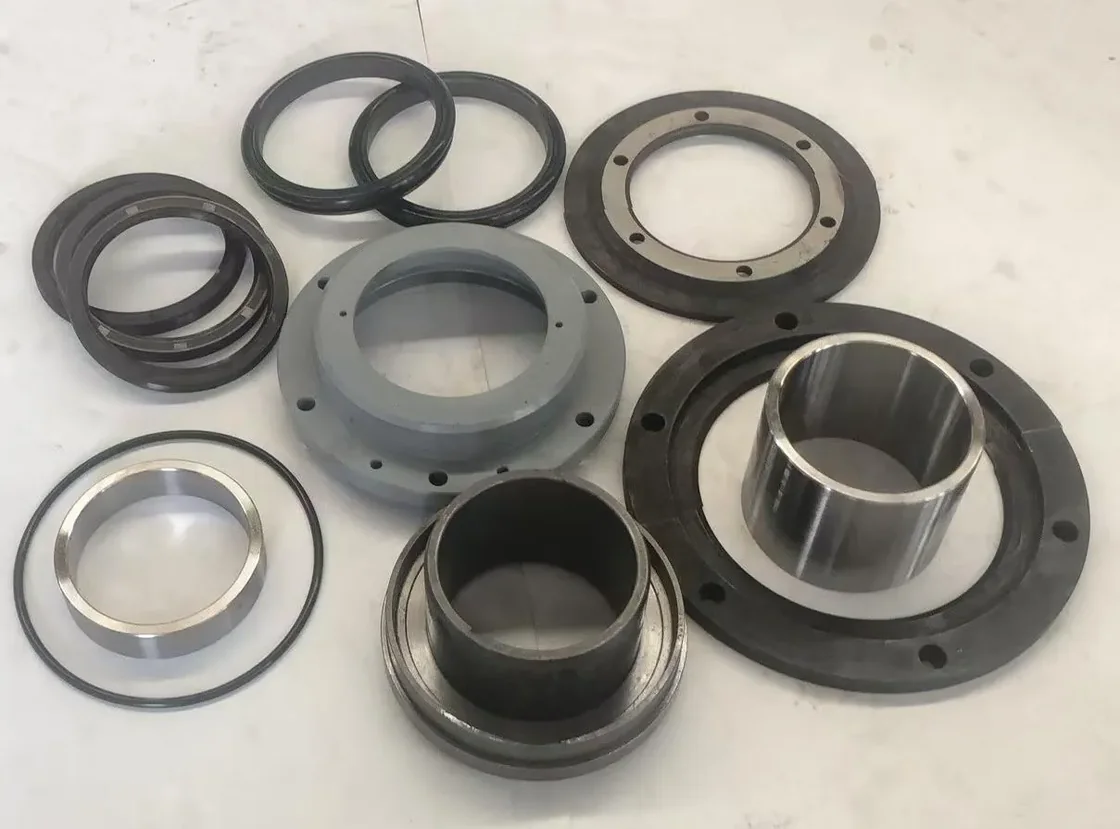
Grout collecting below a mixer does not necessarily come from the component directly above the puddle. Slurry can run along a frame member before it drops. The first useful observation is where fresh material first appears: at a shaft-end housing, along a closed gate edge or at one corner of the discharge opening. Those locations point to different assemblies and different replacements.
At the shaft end: identify the sealing arrangement
Where a horizontal shaft passes through the mixer end wall, the seal keeps material inside while allowing the shaft to turn. Depending on the design, the assembly can include mating face rings, elastomer supports, a labyrinth or purge system, and a replaceable sleeve. Use the drawing for the installed shaft end: a sleeve provides a running surface in some arrangements, but a mechanical face seal seals between its mating faces.
A persistent fresh slurry trace near a housing, a change in the discharge from an inspection outlet, or a lubrication alarm identifies a place to investigate; none establishes bearing failure on its own. On the BHS DKX, for example, the shaft bearing is physically separate from the face seal. On a machine with an automatic lubrication system, use its specified lubricant and delivery settings rather than increasing grease just to hide a leak.
At the gate: distinguish the wear plate from the closing edge
The gate body and its liner carry aggregate as the batch leaves the mixer. The seal, strip or rail at the closing edge retains paste while the gate is shut. A replacement liner restores the wear surface but will not straighten a damaged sealing edge. Equally, a new seal cannot compensate for a gate that is not seating as designed.
- Leak across most of one straight edge: Compare the seal profile and mating edge along their full length. The retainer, its orientation and the material it holds can be separate items.
- Leak at one corner: That corner’s liner joint, hardened deposit or local gate alignment may explain why the rest of the edge still seals. Mark the corner on an overall view of the gate.
- Concern at a shaft housing rather than the door: Keep the shaft-end reference separate on the parts list. A shaft sealing ring and a discharge-gate seal are not alternate names for the same piece.
Make the replacement request specific to the assembly
A photo of the exposed part taken during an authorized shutdown, paired with an overall view of its position, often does more than a description such as “rubber seal.” For a shaft end, identify the assembly on the exploded drawing and distinguish individual components from items supplied as a matched set. For a gate, distinguish the wear plate from the sealing profile and its retaining hardware. Sureay can use either a part reference or a photo to discuss the replacement through our parts inquiry.
Shaft and gate inspections belong within the machine’s isolation and entry procedure. A stopped mixer drive does not by itself secure a hydraulic or pneumatic gate; authorized staff must isolate and restrain stored movement before accessing the area.
Technical references
Related reading and parts
Get a quote for your mixer
Share a photo showing where the leak appears and the mixer model so our team can help identify the seal or gate parts.