
Seven signs of concrete mixer wear and which parts to inspect
Read seven changes in mixer behaviour, from recurring wall deposits to local liner wear, and see which blades, scrapers, seals or plates to inspect.
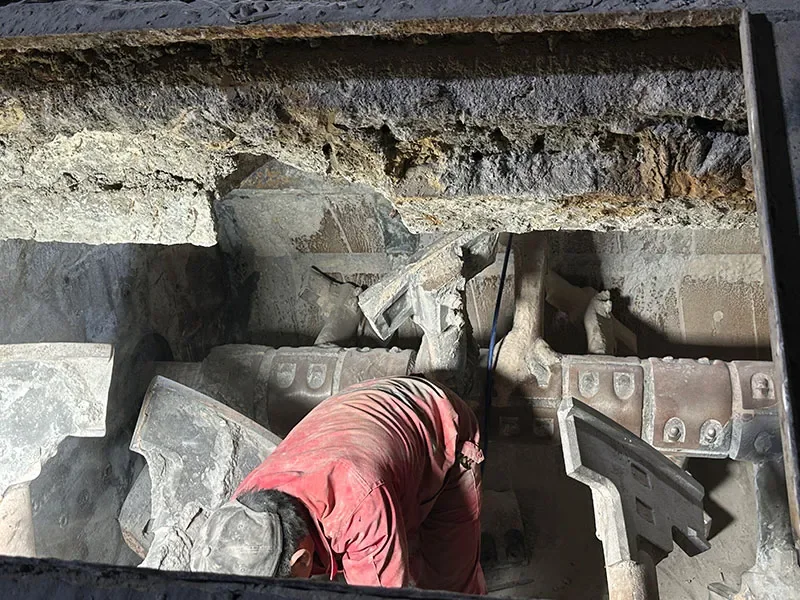
A hard ridge of concrete keeps returning to the same end wall after cleaning. That observation tells the maintenance team more than “the mixer needs a set of blades.” The location points first to the end scraper, its mounting and the wall liner it passes. Here are seven observations that can help locate the affected parts before a planned changeout.
Record operating symptoms from the normal operator position with guards in place. Internal inspection is for authorised maintenance staff after they isolate and verify hazardous energy, secure moving parts and follow the site’s entry procedure. Suspected loose metal or repeated impacts call for a stop under the plant’s safety procedure, not another test batch.
Seven signs and their likely inspection points
- Motor load changes on a familiar recipe. First compare batches of similar size, moisture and aggregate. If the change persists, include hardened deposits, blade condition and clearances in the inspection. Current alone cannot identify a worn casting.
- A familiar mix takes longer to become uniform. Alongside batching and moisture records, check the working faces of the paddles. A rounded leading edge or a blade that has lost width changes how material moves across its path.
- A knock repeats at the same point in rotation. During the isolated inspection, look for a loose tool, a lifted liner edge, a protruding fastener or trapped material. A bright contact mark on the adjacent part can help locate the pair involved.
- A ridge returns to one wall or corner. Match the ridge to the scraper that sweeps that area. A narrow strip on an end wall points to a different position from a band around a planetary pan. Compare the scraper edge and its carrier with the intended profile.
- Slurry appears outside the chamber. Trace the source. A track from a shaft penetration points to the shaft-end sealing area; a wet line beneath a closed gate points first to the gate seating and seal. They are different parts requests.
- Mounting hardware is becoming part of the wear face. A liner worn down to its bolt pocket, or a blade at the end of its approved adjustment range, merits comparison with the machine’s replacement limits. Check the seat and mating hardware along with the casting.
- One patch wears much faster than the rest. Mark its location relative to the feed and discharge. Compare the same position over time rather than averaging measurements over the whole trough. A localised pattern can justify replacing a group of tiles rather than a complete lining.
Turn the observation into a useful parts record
For example, “drive-end scraper, rounded outer edge; deposit against the adjoining end-wall liner” gives a buyer a part, a position and a neighbouring surface to identify. A photo taken during the isolated inspection and a previous order reference can complete the record. Browse replacement blades, scrapers and liners by concrete mixer.
Related reading and parts
Get a quote for your mixer
Send photos of the wear pattern and your mixer model. We can help put together a parts list for your shutdown.