
A field guide to replacement wear parts in a concrete mixer
Follow a batch from feed to discharge to identify mixer liners, blades, scrapers, arm protection and seals, and see which parts work together.
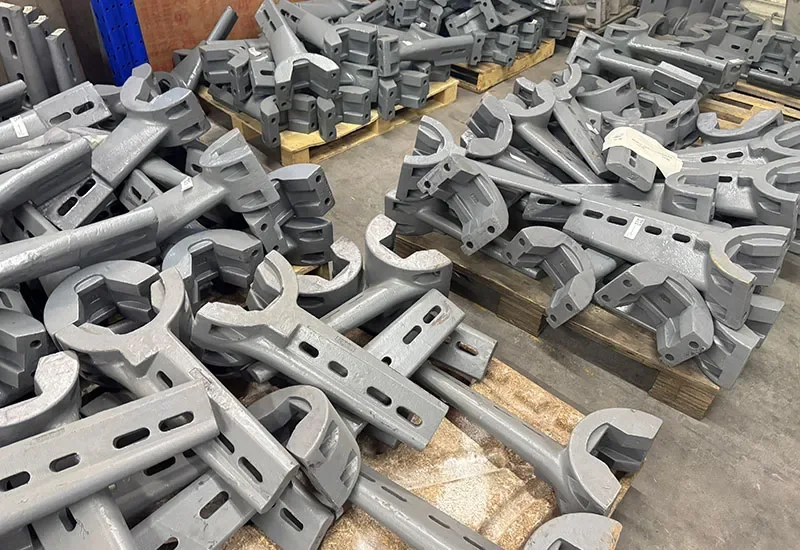
A polished groove across a row of floor liners tells a different story from a chipped plate directly below the aggregate inlet. Both are mixer wear parts, but the first works against material sliding through the chamber; the second also takes the blow as stone enters. Following the route of a batch makes it easier to identify the replacement you need and decide what else belongs in the same changeout.
Where the aggregate lands
Start at the point where material enters the chamber. The plate beneath the inlet takes the first impact. Farther along the trough, the side and bottom liners protect the mixer shell as the batch circulates. A side tile and a bottom tile can look alike on a pallet but have different curvature, bolt positions or edges where they meet the next plate. A photo of that joint often explains the difference better than a face-on photo of a loose casting.
Three pairs of parts to read together
- Blade and arm. The arm carries the blade through the batch. The blade presents a working face to the aggregate, while a replaceable shield or sleeve, where fitted, shields the arm itself. When the outer edge of a blade recedes, look at the protection around the blade seat as well. The blade, arm and guard are separate items on many parts drawings.
- Scraper and liner. A scraper sweeps a particular end wall, side wall or floor. Its position, working edge and the shape of the facing liner determine the path it covers. A new scraper facing a heavily grooved liner can still leave material in the groove. A complete wall relining is not always necessary; the relevant pieces may be one scraper and a single row of liner segments.
- Gate liner and sealing edge. Aggregate travels over the gate liner as the mixer empties. The closing edge has a different job: it retains fines and paste while the next batch mixes. Wear on the plate face and leakage at the edge belong on separate lines of a parts list.
Where a shaft enters the chamber
On a horizontal twin-shaft mixer, seals protect the shaft penetrations at the ends of the trough. A shaft-end seal, its housing and the adjacent end-wall scraper sit close together but serve different functions. A casting next to the shaft may be a guard rather than a seal component. Keep its original position on the model drawing when comparing replacements.
One part or a matched changeout?
If one tile has taken an isolated impact and its neighbors still provide a sound, even surface, that one position can define the order. If several adjoining floor tiles and the paddles above them have worn together, group them by position so the maintenance crew can restore both working surfaces at the same stop. Use the machine’s parts drawing to distinguish left and right; a photograph taken from the opposite end reverses the view.
Start with concrete mixer wear parts to find the relevant machine family. For equipment elsewhere on the same plant, hopper liners belong to the feed or transfer system rather than the mixer chamber.
Technical references
Related reading and parts
Get a quote for your mixer
Send your mixer model or a photo of the part, and tell us whether you need one component or a replacement set.