
Twin-shaft and planetary mixers: how their wear parts differ
See how trough and pan geometry affect blade orientation, scraper position, liner shape and the layout of a concrete mixer changeout set.
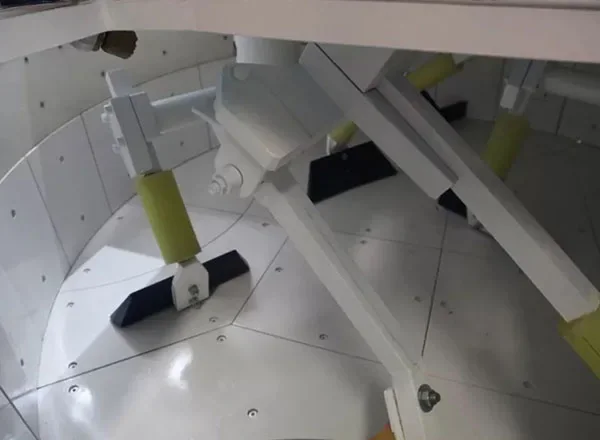
Put a twin-shaft end scraper beside a planetary wall scraper and their names explain only half the difference. One sweeps a fixed end of a horizontal trough. The other follows the circumference of a pan. The two working edges meet different surfaces, in different directions. Start a parts comparison with the path the tool travels rather than its name on a supplier’s list.
The twin-shaft trough: position along the shaft matters
Two horizontal shafts carry arms and blades through a curved trough. A blade’s pitch and position help move the batch along and across the chamber, so a center tool and an end tool may have quite different profiles. A left-hand and a right-hand casting can share a similar bolt pattern even when their working faces point in different directions.
On the fixed side, a curved trough liner must both seat against its backing and meet its neighbors cleanly. Location near the inlet, the discharge opening or an end wall can change its outline. The shaft also passes through the end wall: the sealing components at that point belong to a different assembly from the scraper sweeping nearby. The BHS DKX component illustrations show the distinction between trough lining, shaft sealing and discharge gate.
The planetary pan: distinguish floor sweep from wall sweep
In a planetary mixer, a mixing star turns as it travels around the pan. Its blades work across the floor; other tools can sweep the wall or guide the batch toward the discharge. A floor segment, a curved wall plate and a piece bordering a sector door may all be listed as pan liners, but their edges and fixings serve different positions.
Reversibility belongs to the individual component, not to the mixer type. For example, SICOMA’s MP description identifies reversible wall plates and adjustable blades. That description alone does not make every floor tile or blade reversible. For an actual replacement set, use the reference for the installed part.
How to lay out each changeout set
- Twin-shaft: Lay out two shaft rows in the orientation used by the parts drawing. Within each row, separate the ends from the intermediate positions and keep handed blades apart. Set the wall plates and bottom tiles beside the positions they face.
- Planetary: Group tools by mixing star and distinguish the wall scraper from the floor tools. Group pan plates by floor, perimeter and discharge opening. Two pieces from the same ring may differ at the edge of a door.
A side-by-side layout also makes stock reusable across a fleet when the parts really do match. An identical casting reference and mounting geometry are stronger evidence than a shared batch capacity. Start with the machine family in our concrete mixer parts catalog, then use the fitted model to narrow the list.
Technical references
Related reading and parts
Get a quote for your mixer
Share your mixer model or a photo of the chamber and the parts you plan to replace.