
How to identify and order replacement mixer wear parts
Start with a machine model, part number or photo. See how mounting details and position identify replacement mixer blades, scrapers and liners for a quote.
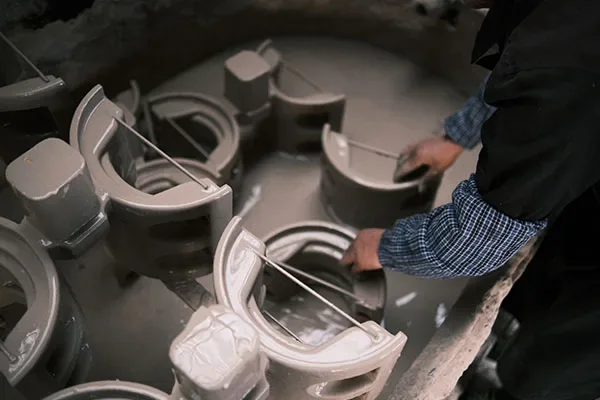
A legible part number is the quickest starting point for a mixer wear-parts inquiry. A photo works too. If the casting mark has worn away, the mounting face, fixing pattern and position inside the mixer usually tell us more than the outline of its worn edge.
Start with whichever reference you have
- A previous order or parts book: share the part reference, position and quantity. Keep a casting mark separate from a catalogue number unless the two are known to match.
- A machine nameplate: a clear photo preserves model suffixes and revision details. On a site with several plants, identify which mixer the order is for.
- A loose part or drawing: show the working face and the back or mounting face. Include a scale in the same plane and identify which way the part sits. A drawing revision is especially useful if the design has changed.
You do not need all three to start a conversation. A buyer replacing a single known scraper may need only its reference and quantity; a mixed set of unmarked liners takes more sorting.
Which dimensions help with an unmarked part?
Liner plate: record hole centres, the fixing-seat shape and any reliable original thickness. For a curved segment, a measured chord and the rise at its midpoint help describe the mounting curve; state whether measurements follow the inner or outer surface. A profile drawing is better than guessing the radius from a photograph.
Blade, paddle or scraper: show bolt spacing, slots, offset and the blade’s orientation relative to the mounting face. Label handedness with the viewing direction. A rounded leading edge records wear, not the new blade’s original length.
Mixing arm or shank: photograph both the shaft end and the tool seat. Two arms that carry a similar blade may differ at the clamp, in offset, or in the distance from the shaft to the seat. State units on every sketch.
Group a mixed order by mixer and position
For a multi-plant buyer, one item per line is easier to price and receive than a folder of unnamed photographs. Give each photo the same identifier as its line. For instance, “Plant 2 · drive-end scraper · right-hand viewed from drive · 2 pieces · photo B” remains clear when a colleague checks the quotation.
If material choice is part of the inquiry, add a brief note on the aggregate and how the previous part wore. A smoothly thinned face and a fracture at a mounting pocket point to different questions. Where a matched set or a delivery date matters, include that in the same message so the quotation can address the whole requirement.
Send a single item or build a parts list
Find identified items in the parts catalogue and add them to the inquiry list. For an unlisted profile or an unmarked part, send the photo, drawing or reference directly. The quotation can distinguish confirmed items from any detail still being matched without holding up the whole discussion.
Related reading and parts
Get a quote for your mixer
Start with a model, an OEM reference, a drawing or a clear photo. We can work with what you have and follow up on the remaining details.