
Mixer wear-part materials: choosing by wear zone
Compare cast iron, abrasion-resistant steel plate and polyurethane by mixer duty: sliding aggregate, feed impact, scraping and discharge.
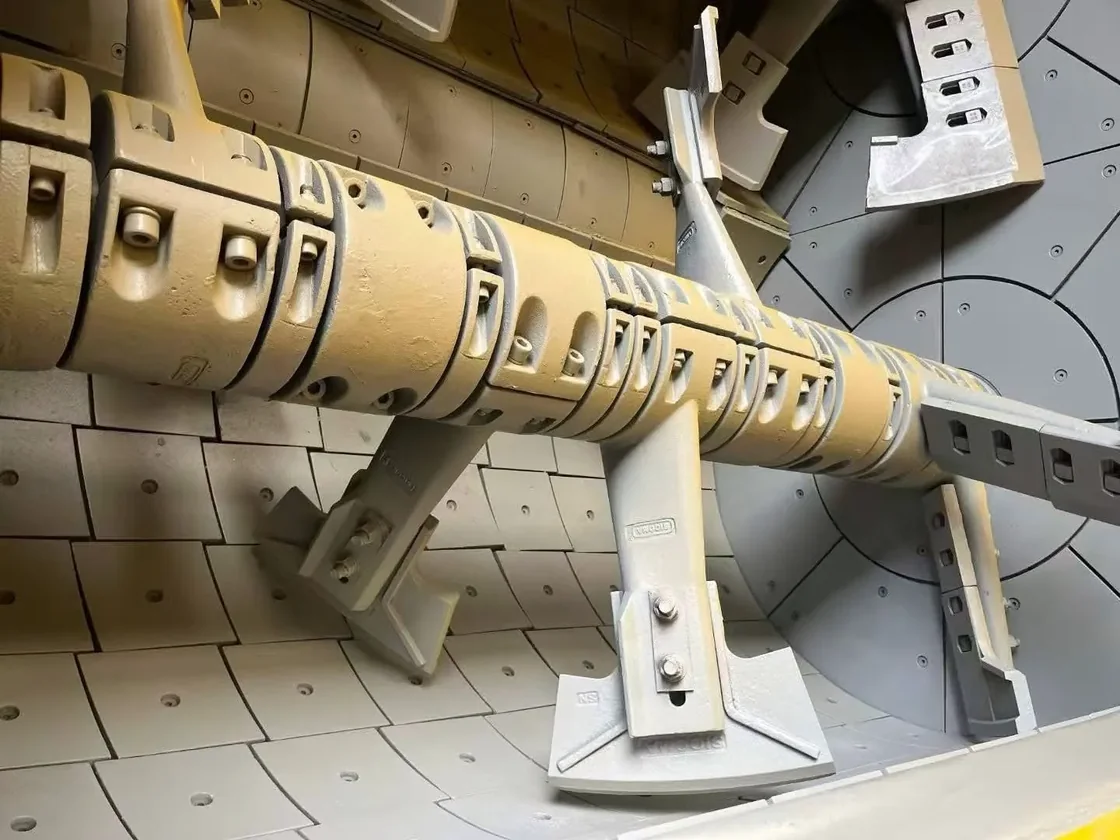
A liner under a falling stream of stone and the lip of a scraper may both be called “wear parts.” One needs to absorb impact without losing its shape; the other may need a little flexibility to follow a surface. Before comparing hardness figures, locate the part on the machine and identify what actually removes it from service: gradual loss of thickness, a broken corner, a torn edge or material building up on its face.
Sliding aggregate: cast iron for shaped wear faces
Ni-Hard 4 and high-chromium white iron are both used for cast parts exposed to abrasive sliding. Casting makes it possible to put metal where it does useful work: a thicker leading edge on a blade, a contoured mounting face or extra stock along a liner edge. The alloy name describes the material family; the part still needs the right shape and support behind it.
A blade that steadily wears thin is a good candidate for a comparison between cast grades. If a thick, otherwise unworn tile keeps cracking close to a bolt hole, compare the backing and contact around that hole before attributing the failures to hardness. Our high-chrome and Ni-Hard 4 comparison looks more closely at the two cast options.
Feed impact: where wear plate makes sense
A hopper panel or inlet liner may take repeated blows as well as sliding abrasion. Abrasion-resistant steel plate is useful when the panel needs toughness and a cut or formed profile. Hardox is one family of wear plate; its grades are not interchangeable specifications. SSAB’s liner material selection guidance distinguishes sliding wear from service with greater impact.
For example, a flat hopper panel cut from plate and a curved mixer tile of the same nominal thickness are different designs. The panel may need bends and cutouts; the tile may have a cast fixing recess and a radius that seats against the shell. Keep those features in the comparison rather than matching the two parts by thickness alone.
Scraping and discharge: when the edge should flex
Polyurethane can be useful in scraper blades or chute liners designed for it, especially where wet material tends to cling. The flexible working edge and any supporting metal backing are part of the design. A steel scraper running clear of a liner and an engineered polyurethane tool designed to run closer are not direct material swaps. Compound, temperature and exposure to sharp aggregate all matter, particularly when moving from a wet concrete application to a hot asphalt process.
Compare the same position over the same duty
Keep the last part from one known position and record why it came out. For a material trial, compare the next part at that same position against similar aggregate and output. Separate a worn-through face from a fractured fixing or a part changed early to suit a planned shutdown. Those three outcomes can give the same service interval but lead to very different material choices.
Technical references
Related reading and parts
Get a quote for your mixer
Share a photo of the worn part and the material you process. We can discuss replacement options for that position.